Real, unretouched captures.
Every image below is a live render of the running application, captured against an isolated instance seeded with fictional data. Grouped by section, each shot is tagged with the distinct visual / render types it demonstrates. This is a 3D product experience and a CMS — not an analytics dashboard — so its "visual vocabulary" is WebGL renders, KPI tiles, tables, cards, badges, grids, editors, forms and maps rather than line/bar/pie charts.
Public Site · Home
Dark theme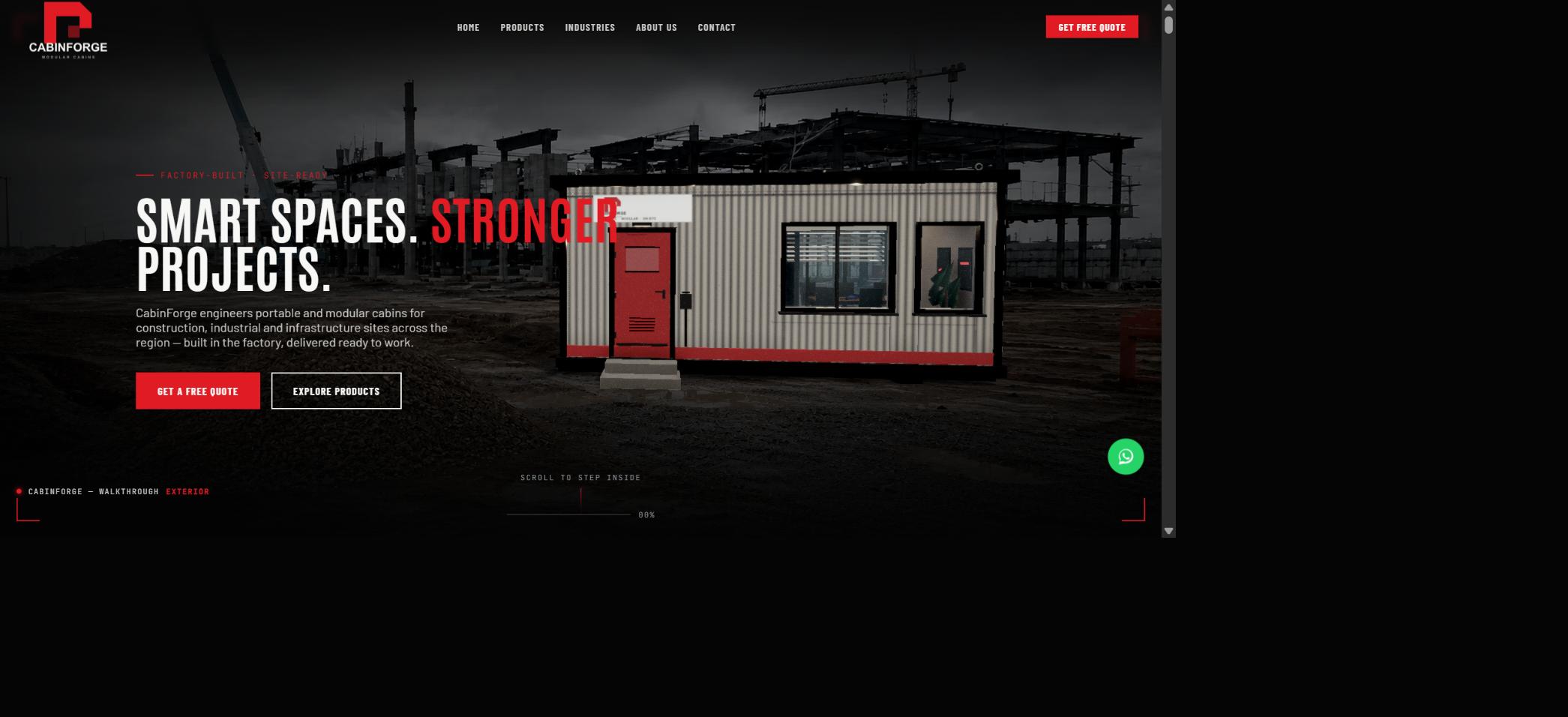
Homepage hero — live 3D site-office cabin
The scroll journey opens on a fully rendered WebGL cabin. A progress HUD tracks the walkthrough as the visitor scrolls "inside".
Public Site · Products
Dark theme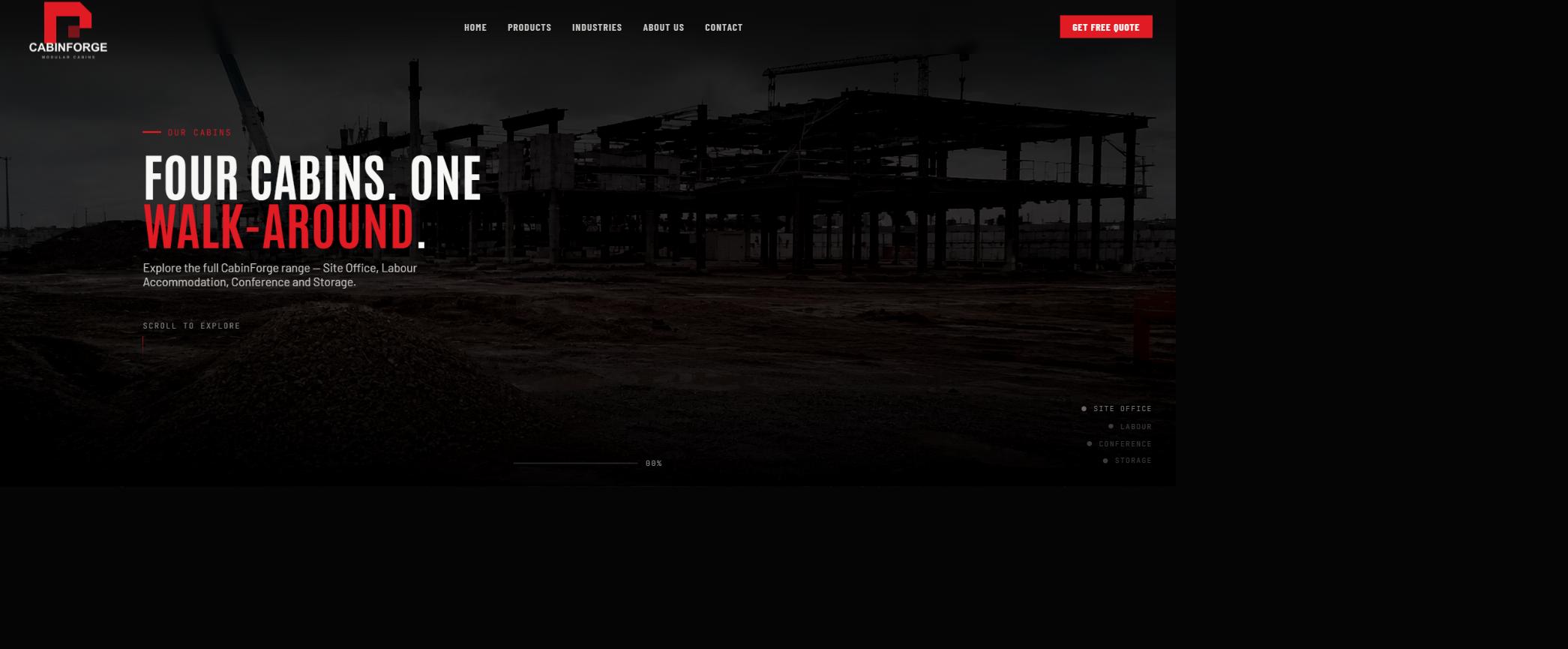
Products intro & category rail
Page-intro hero with a live progress bar and a per-model category rail that tracks the 3D walk-around.
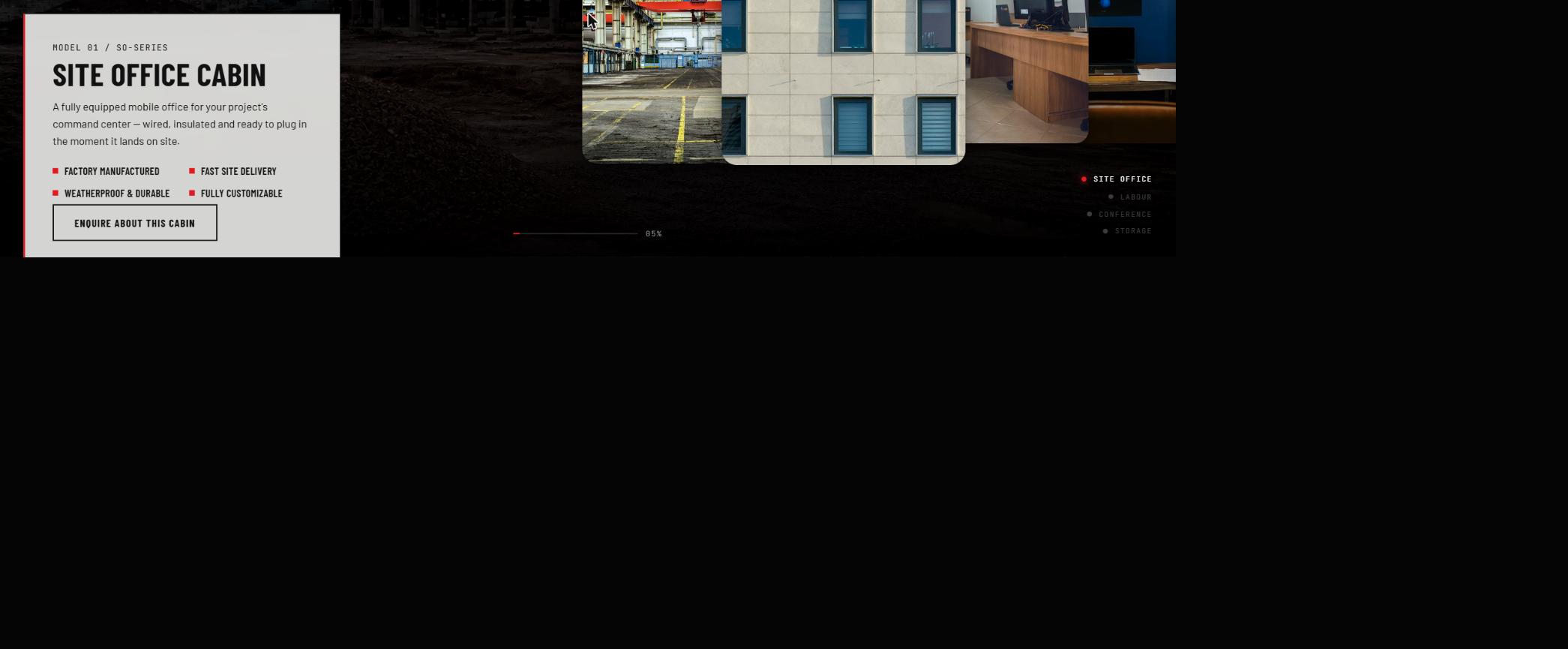
Product spec card & image slider
Each model pairs a spec card (model code, feature bullets, CTA) with a layered image slider of real photography.
Public Site · About
Dark theme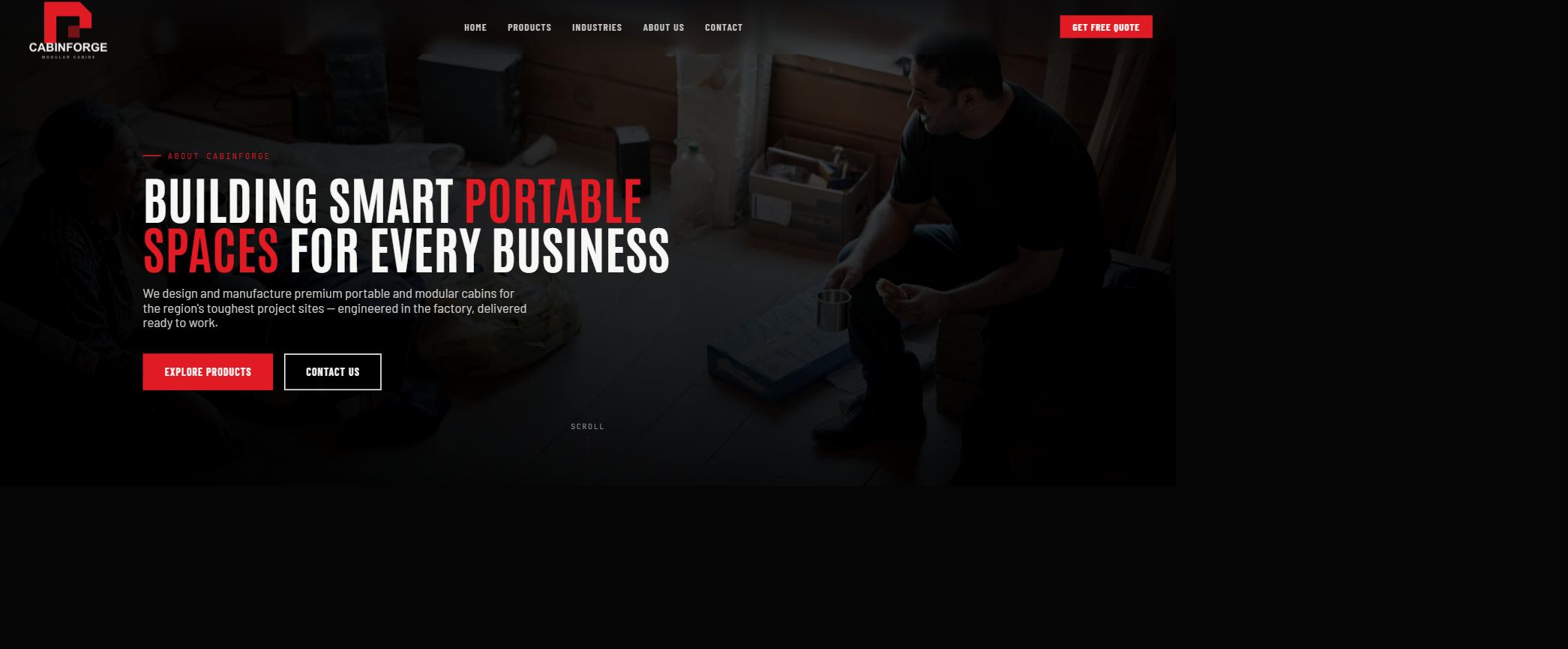
About hero
Full-bleed hero introducing the (fictional) manufacturer, with dual calls to action.
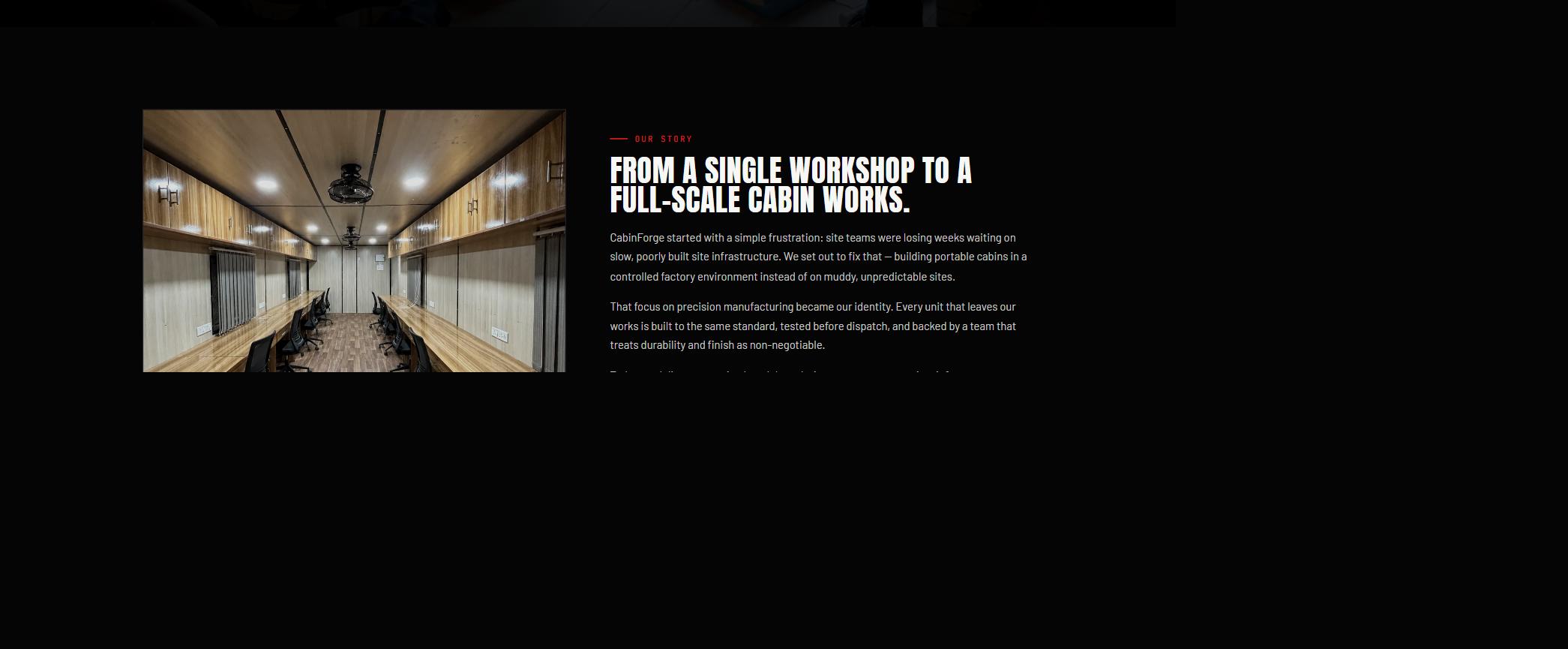
"Our Story" — image + copy
An editorial image-and-copy block, one of several reveal-on-scroll layouts on the route.
Public Site · Industries
Dark theme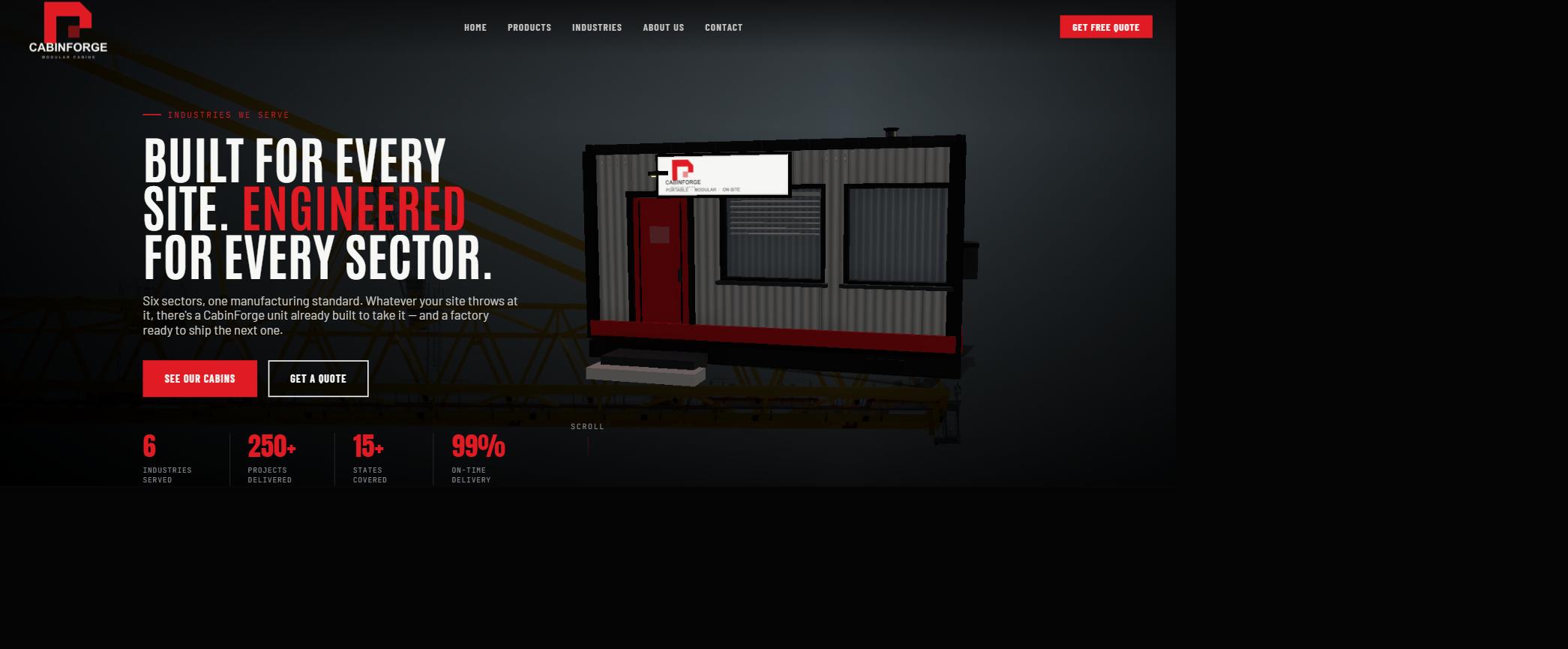
Industries hero — 3D cabin + KPI stat tiles
A second, more detailed 3D cabin hero, above a row of KPI counters that animate up on scroll into view (captured here at their final, settled values).
Public Site · Contact
Dark theme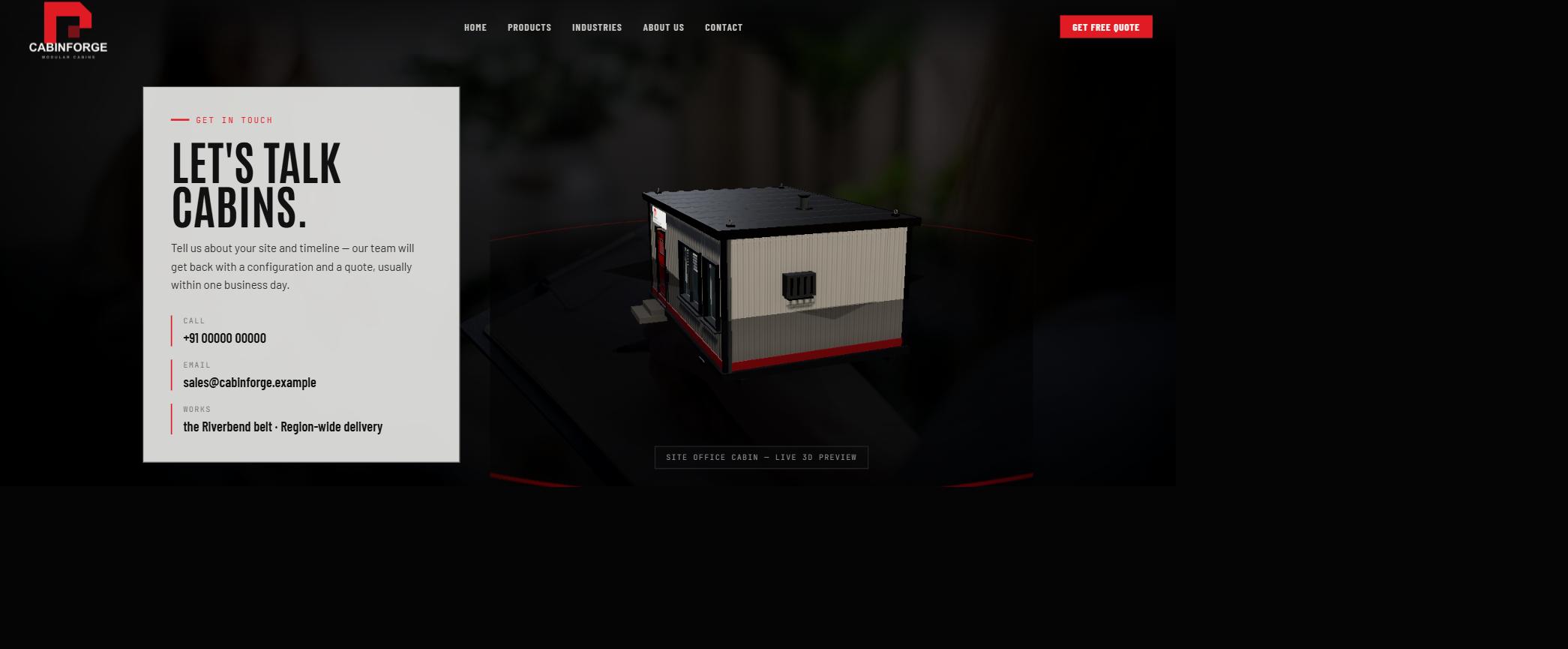
Contact hero — live 3D preview
A continuously rotating 3D cabin sits beside a quick-contact card. All contact details are fictional placeholders.
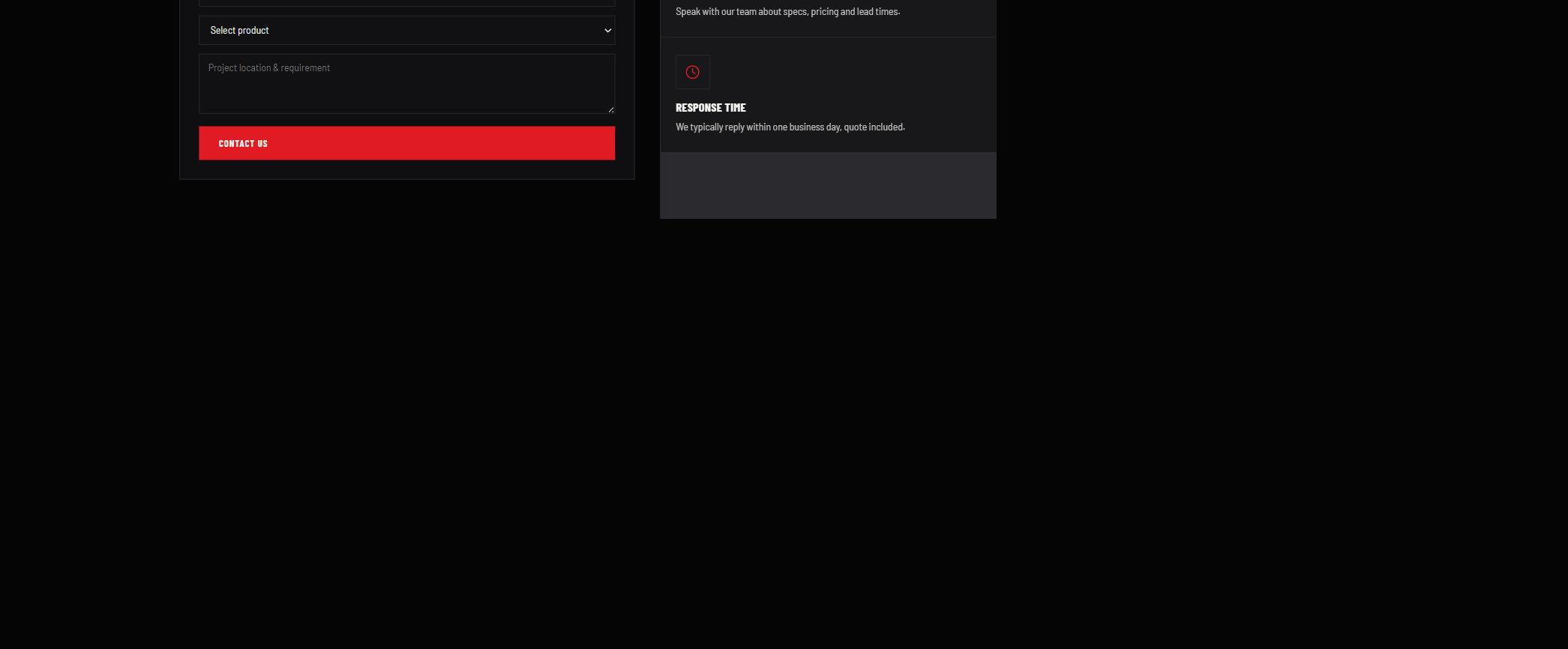
Quote request form & info cards
The public enquiry form that feeds the admin quote pipeline, supported by service info cards.
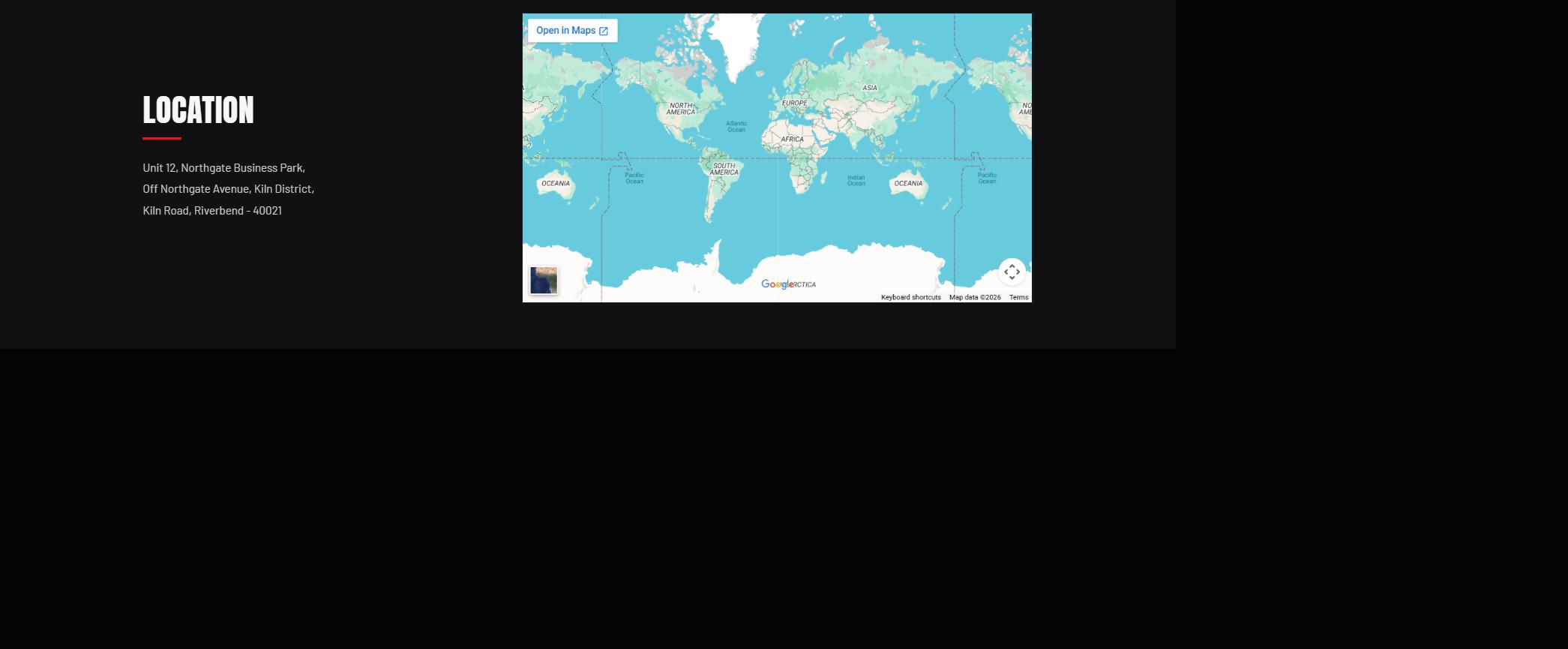
Location — embedded map
An embedded map keyed to the address. Because the address here is a fictional placeholder, the embed resolves to a world view rather than a real pin.
Public Site · Projects
Dark theme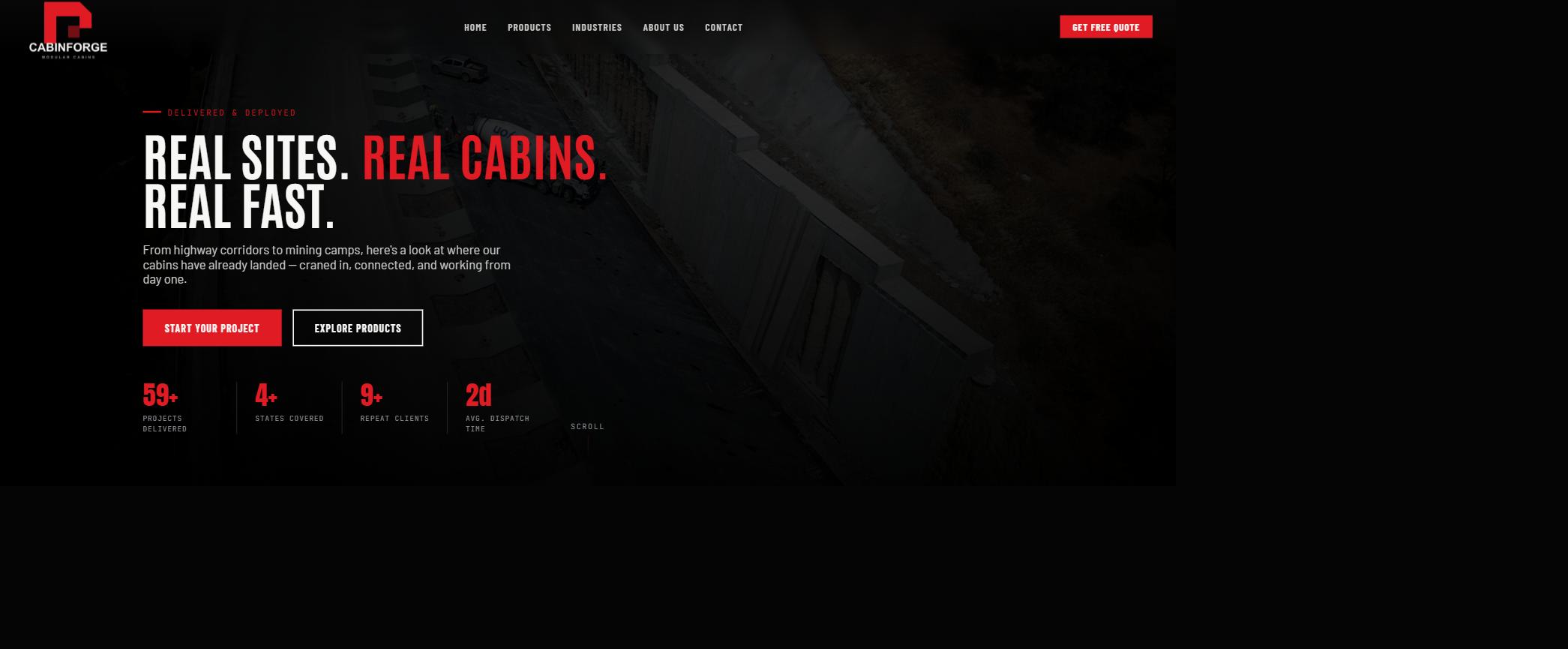
Projects hero — KPI tiles
The Projects route (re-enabled in this isolated copy for capture) leads with its own animated statistics.
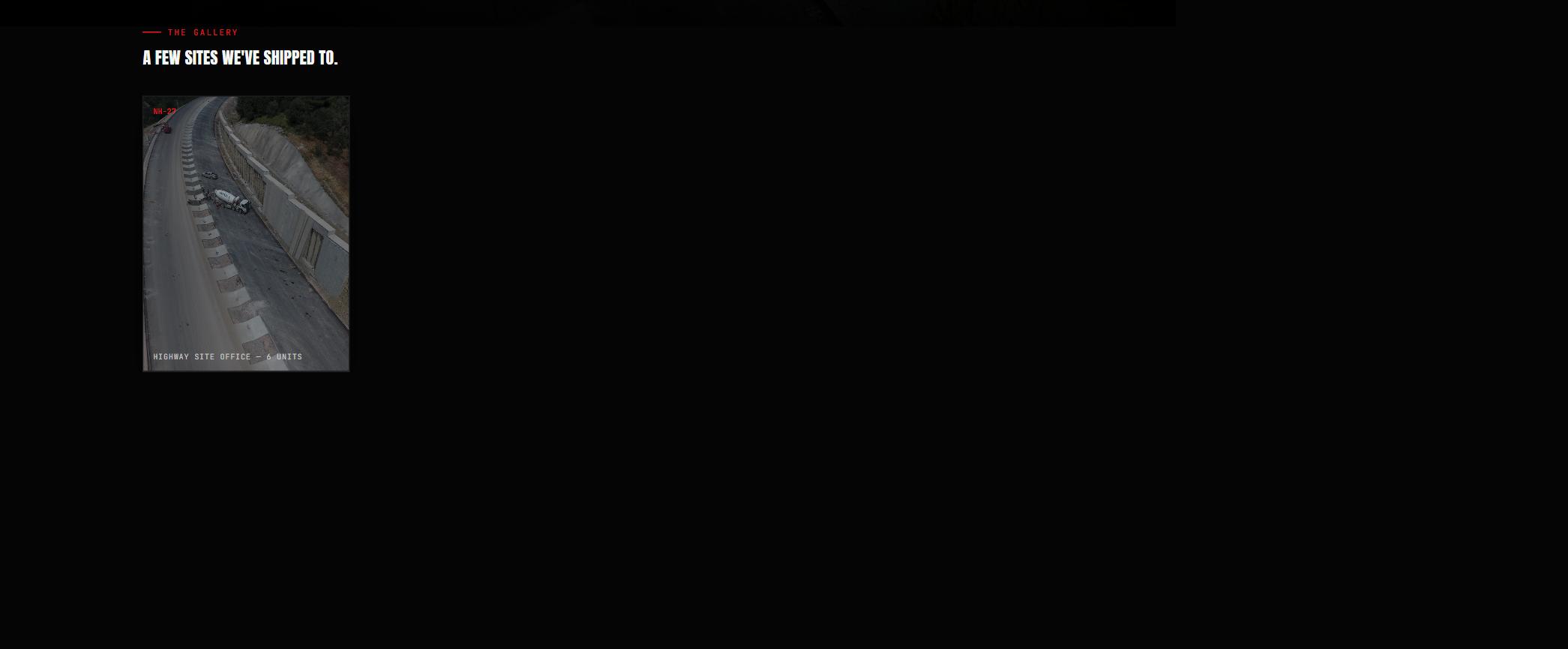
Project gallery tile
Large full-bleed project tiles reveal one at a time on scroll. Project codes are generic, fictional placeholders.
Admin CMS
Light theme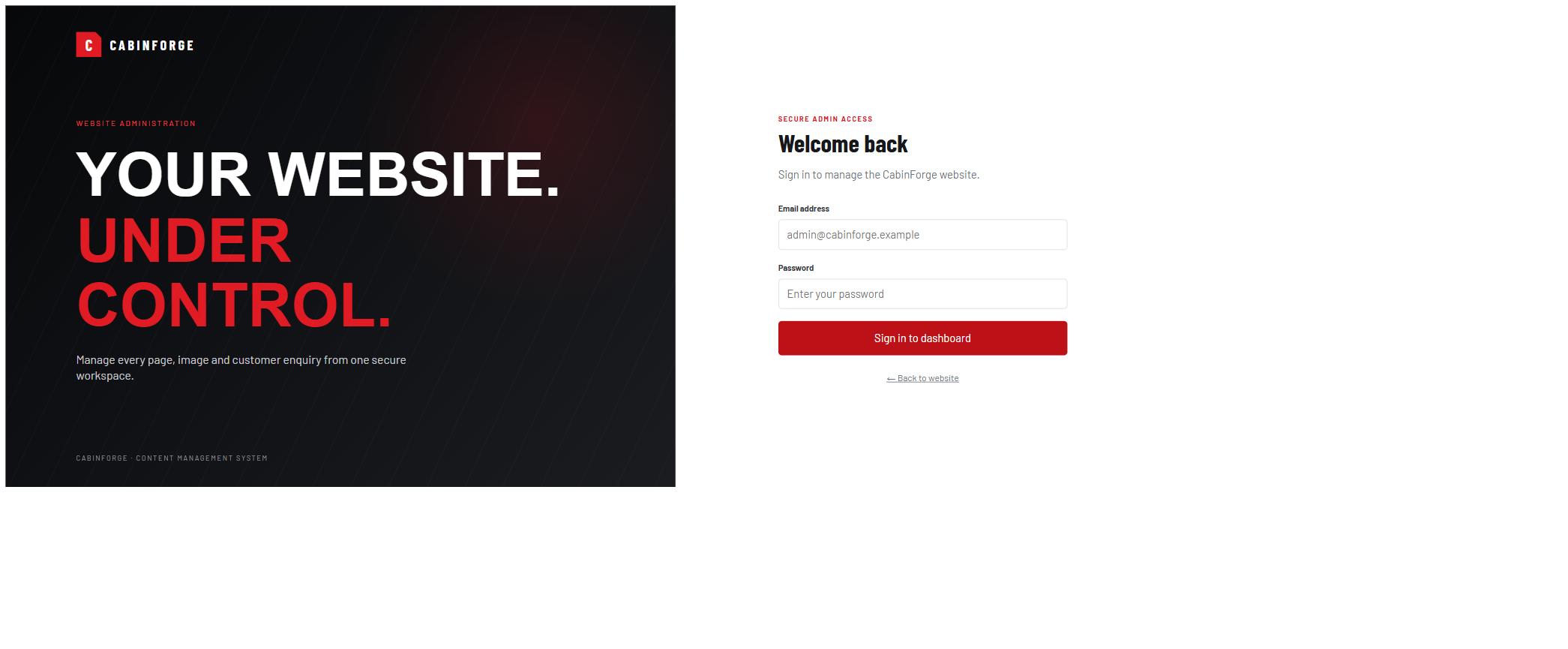
Admin login
Split-screen authenticated entry to the CMS. Credentials shown are throwaway demo values.
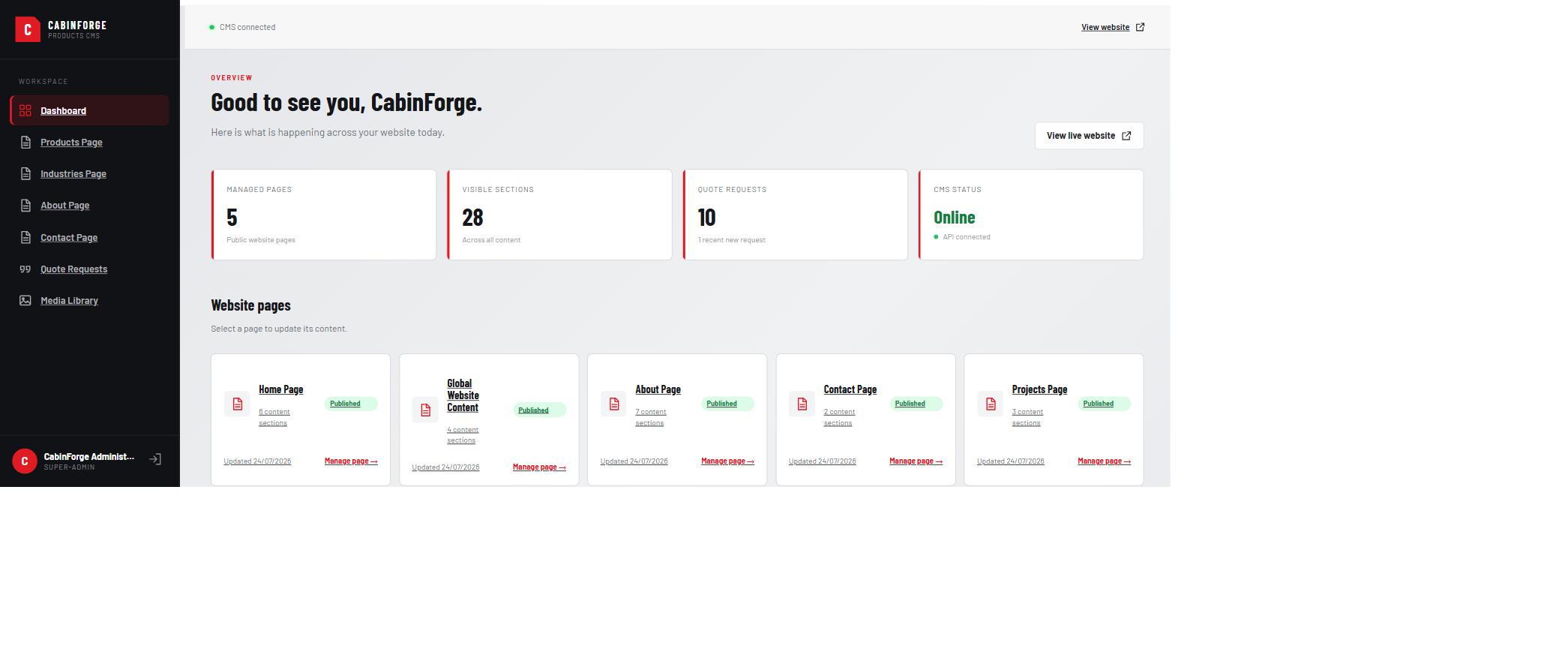
Dashboard — KPI cards & page grid
Overview KPIs, a page-card grid with publish-state badges, and a persistent sidebar navigation.
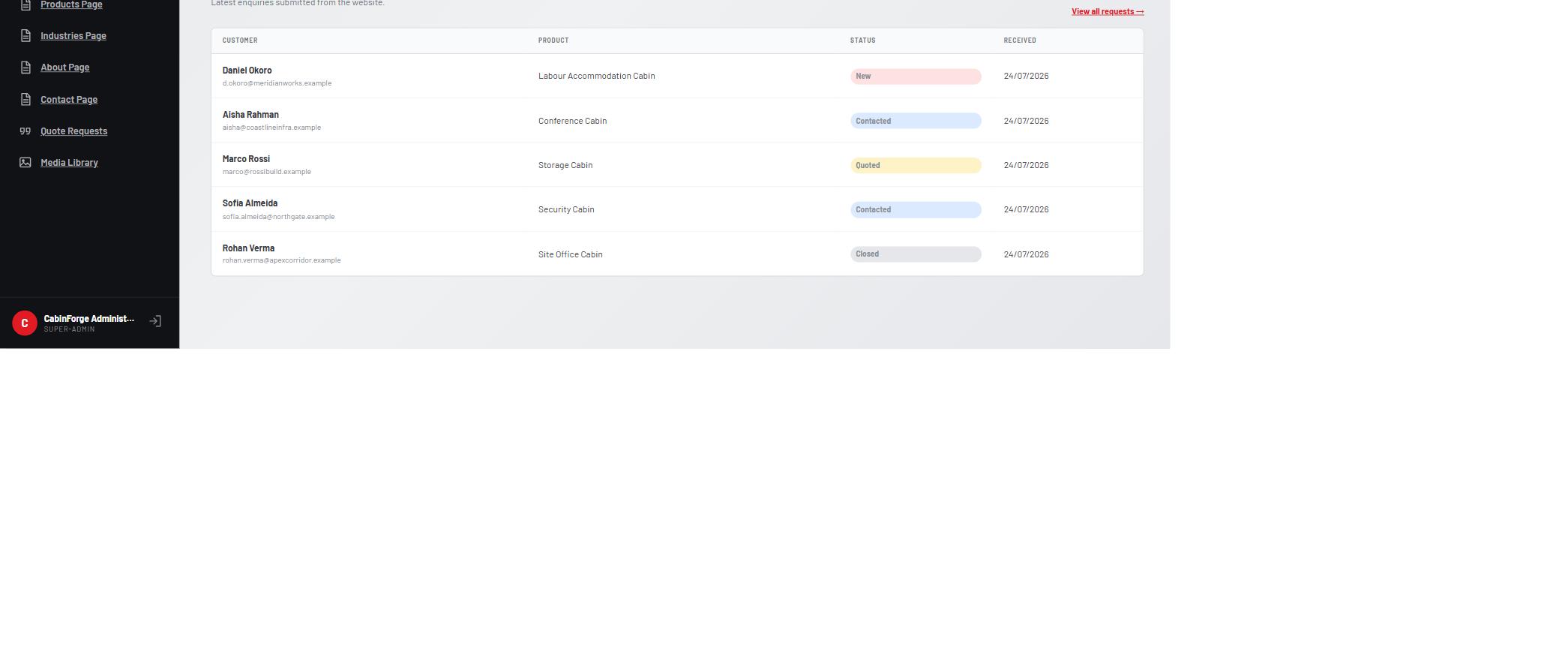
Recent enquiries table
The dashboard's recent-quotes table with colour-coded status pills, populated with fictional enquiries.
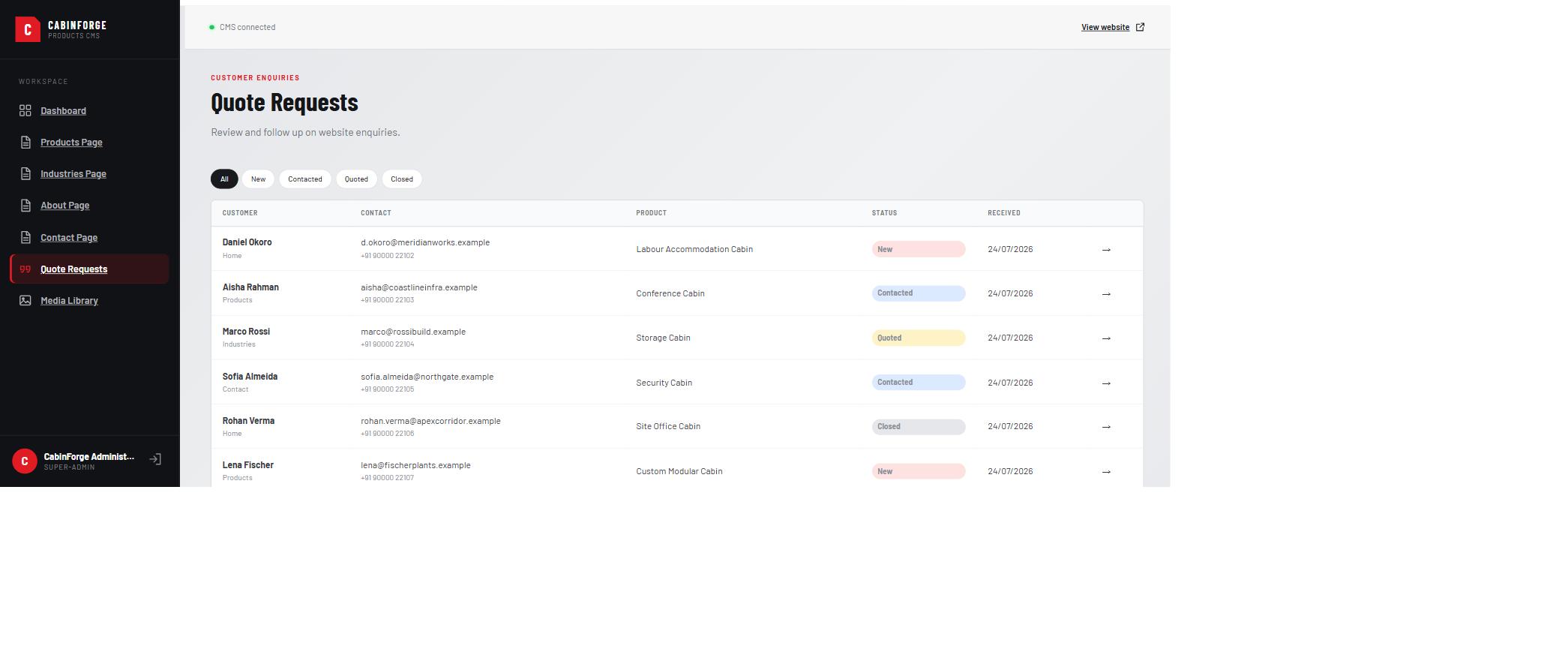
Quote Requests — filterable table
The full enquiry pipeline with status filters and per-row contact detail. All names, emails and phones are invented.
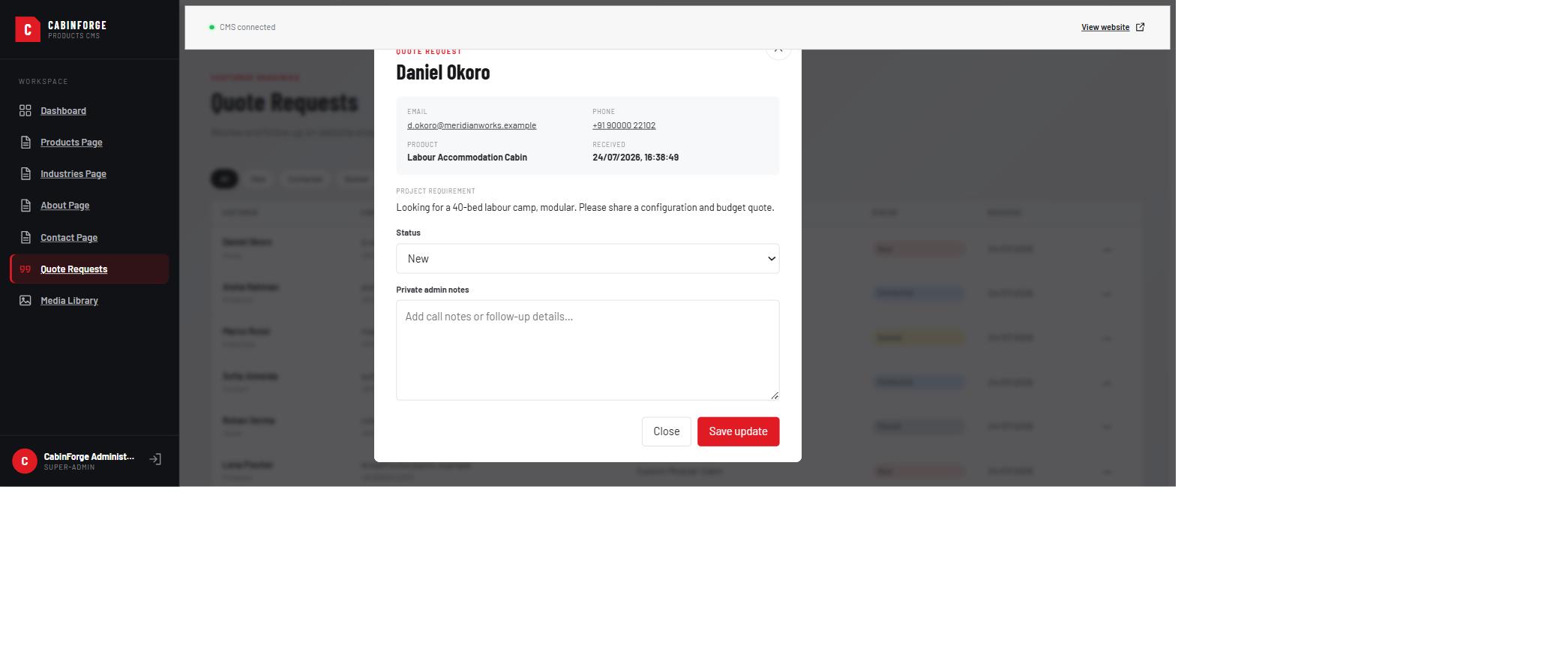
Quote detail modal
Drill-down modal with the enquiry, a status selector and a private admin-notes field for follow-up.
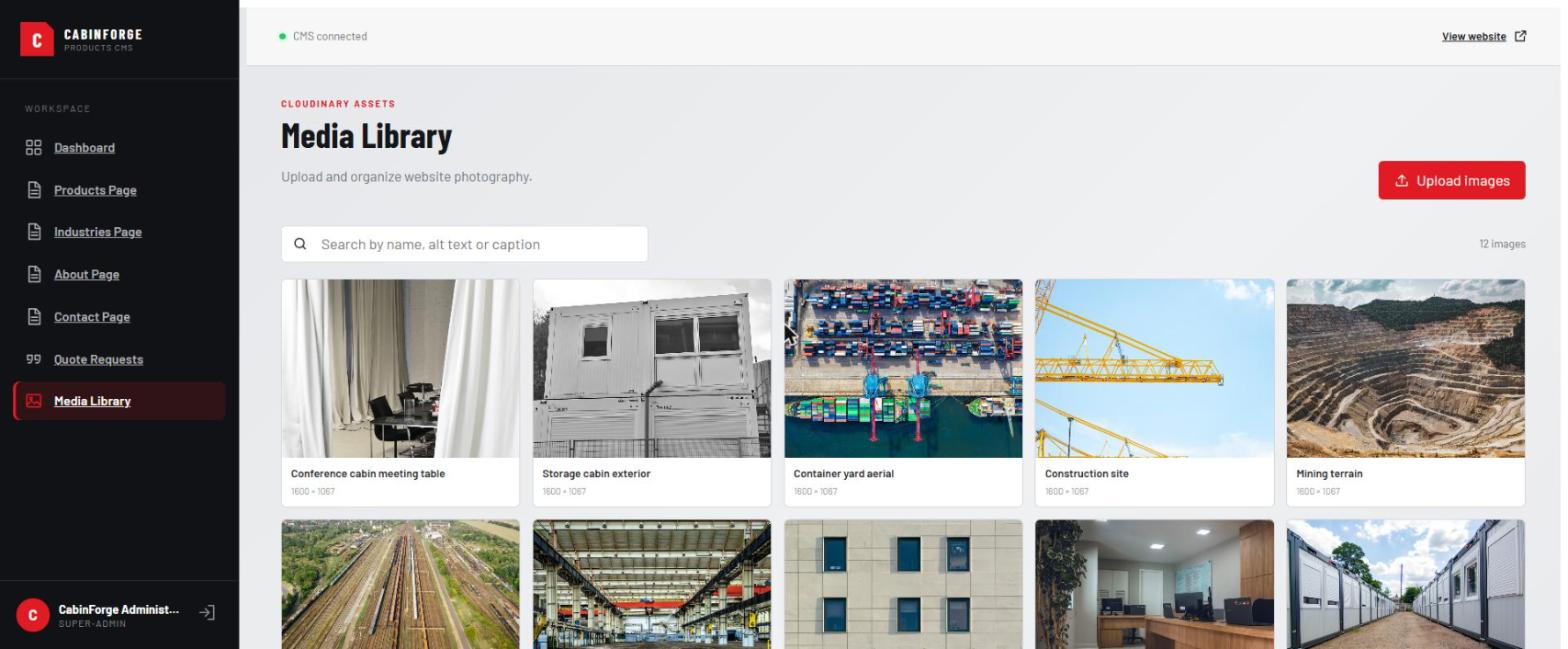
Media library — asset grid
Searchable thumbnail grid of Cloudinary-backed assets with alt-text captions and dimensions.
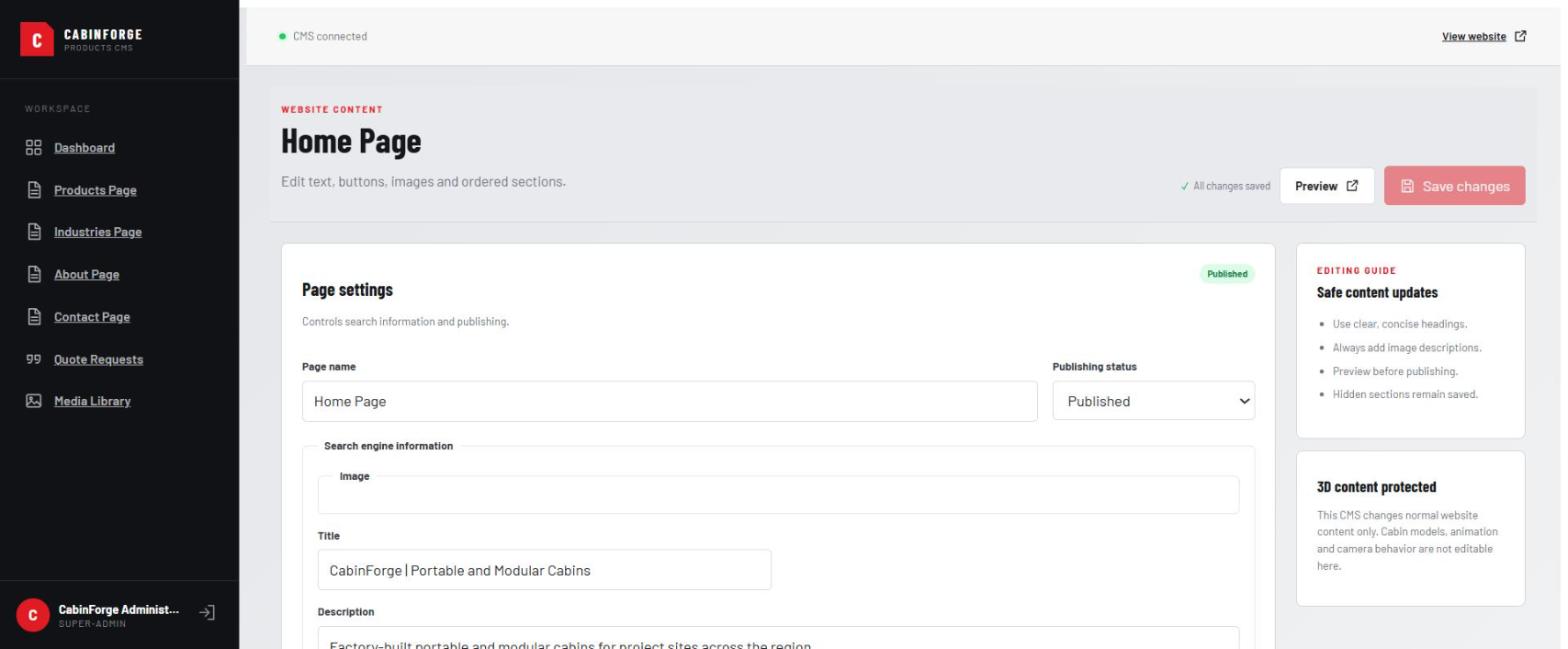
Page editor — settings & SEO
Per-page editor with publishing state, SEO fields, and a helper sidebar reminding editors the 3D scene is protected.
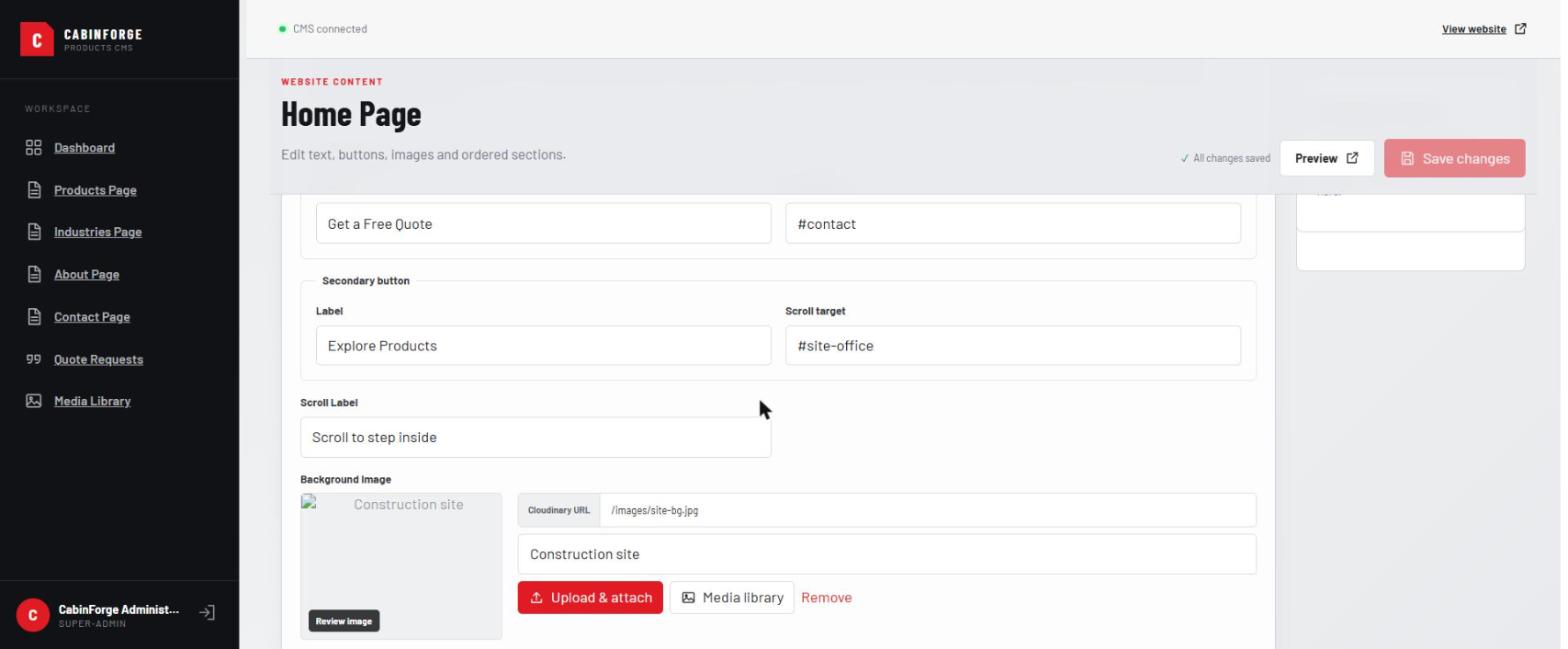
Page editor — nested fields
Deep, typed field editing: button labels, scroll targets and image fields with media-library attach and per-image alt text.